
For decades, anyone insulating their home has almost automatically turned to glass wool or rock wool. The mood is now shifting: a natural raw material from the Mediterranean is gaining ground and becoming a serious rival to conventional insulation products – cork. But what is driving this trend, and is switching really worthwhile for UK homeowners?
Why cork is overtaking glass wool
Many people know cork only as a bottle stopper or flooring material. Yet it has long been suitable as a fully fledged insulation product. Increasing numbers of homeowners are having cork boards installed during new-build projects or refurbishments – often in precisely the places where glass wool was once used.
“Cork delivers several benefits at once: thermal insulation, sound insulation, environmental credentials and durability – without chemical additives.”
The key factor is that many people want to move away from artificial-feeling building materials, fibre dust, skin irritation and difficult disposal. Cork, by contrast, feels natural, is kind to the skin and fits perfectly with the idea of a “healthy home”.
Effective thermal insulation in winter and summer
From a thermal perspective, cork offers considerably more than its lightweight appearance might suggest. Cork oak bark consists of millions of tiny air-filled cells. This structure makes it a very poor conductor of heat – exactly what is required from insulation.
In winter, it helps retain warmth indoors; in summer, outdoor heat reaches the interior only after a considerable delay. Specialists refer to its high “thermal phase-shift effect”: midday heat does not arrive inside the house until many hours later. This is a genuine boost to comfort, especially beneath roof spaces.
- Heating energy use falls because less warmth escapes outside.
- Rooms overheat far more slowly in summer.
- The indoor climate remains more even, with fewer temperature fluctuations.
Anyone who has sweated in a poorly insulated loft room will notice the difference immediately: with cork, conditions remain noticeably comfortable for longer before air conditioning even needs to be considered.
Cork as a natural sound absorber
As well as providing thermal insulation, cork also performs well acoustically. Its elastic, slightly springy structure absorbs vibrations rather than transmitting them. This effectively reduces both impact noise and airborne sound.
In practical terms, traffic noise, voices from the neighbouring property and footsteps from the flat above come through much more quietly. Demand is growing, particularly in blocks of flats and closely built terraced homes, for insulation that noticeably reduces noise – a classic application for cork.
“Using cork beneath floors or behind plasterboard walls improves both energy efficiency and peace and quiet in the home.”
A renewable raw material instead of glass fibres
Another reason for the trend is its origin. Cork comes from the bark of the cork oak, which grows mainly around the Mediterranean. The bark is carefully stripped every nine to twelve years. The tree remains standing, grows new bark and continues to absorb CO₂.
This creates a cycle that appeals to many environmentally conscious self-builders:
- No trees are felled, so cork oak forests are preserved.
- Harvesting supports stable ecosystems over the long term.
- Processing requires little energy and generally avoids complex chemical treatments.
- Cork is biodegradable and can be recycled.
Compared with the energy-intensive manufacture of glass wool, this is considerably more appealing to many homeowners. Those planning a “green” refurbishment or considering grants for sustainable building materials are therefore looking at cork more often.
The many ways cork can be used in the home
Cork insulation is not limited to one format. Manufacturers offer boards, rolls and granules, each intended for different areas of a building.
Walls: insulation inside and out
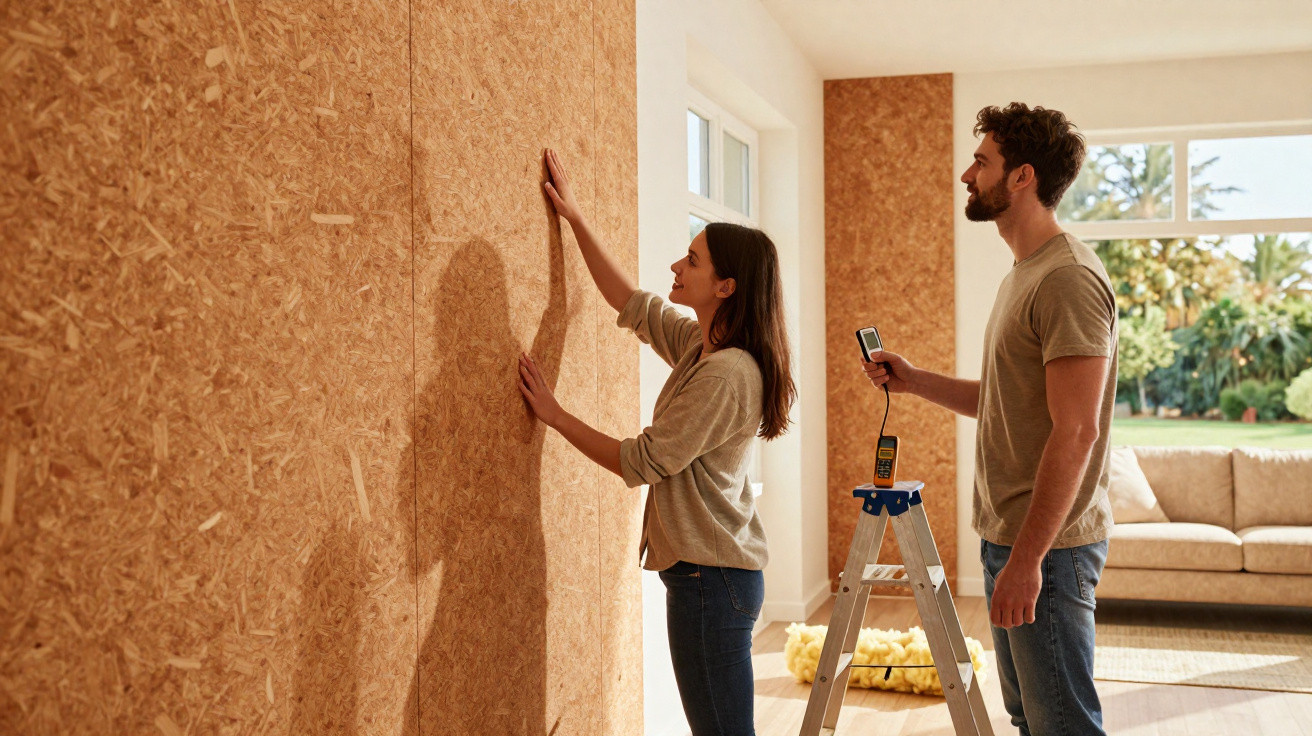
Rigid cork boards are suitable for internal and external walls. They can be bonded directly to masonry or fixed mechanically. Indoors, they can be concealed behind plasterboard or clay plaster; externally, they may form part of an external wall insulation system.
Roofs: protection from heat and cold
Installed beneath the roof covering, cork slows both winter cold and summer heat. Cork boards are increasingly replacing conventional mineral wool, particularly in converted lofts. Many residents report a noticeably more pleasant climate beneath sloping ceilings.
Floors: softer underfoot and less noise
Used as an underlay beneath parquet, laminate or tiles, cork improves impact sound insulation and creates warmer-feeling floors. Anyone walking barefoot through the house can feel its slight resilience. In older buildings with noisy timber joist floors, a layer of cork can prevent considerable stress with neighbours.
Durable, moisture-resistant and rarely affected by pests
Cork naturally has properties that other insulation materials often achieve only through additives. The bark is inherently largely resistant to rot and mould because it provides little nourishment for micro-organisms.
“Cork does not rot, rarely goes mouldy and remains stable for a long time even in more humid areas – entirely without toxic wood preservatives.”
Many insects and rodents also avoid the material, as it has no taste and cannot easily be gnawed through. This reduces the need for chemical treatments and makes cork particularly attractive to allergy sufferers and families with children.
Cork also performs solidly in terms of fire safety: it is difficult to ignite, tends to char on the surface and releases significantly fewer toxic gases than some synthetic insulation products.
Higher upfront cost – but still worth calculating
The point that initially puts many people off is the price. Per square metre, cork insulation is generally considerably more expensive than glass wool. However, many homeowners see cork as a long-term investment rather than simply a cost.
The calculation is based on the following:
- Good insulation performance reduces heating and cooling costs over the years.
- Its long lifespan cuts the need for refurbishment work.
- The environmental benefit can increase a property’s value.
These factors are viewed particularly positively by people intending to occupy their home for many years or sell it later as a high-quality property. Sustainable, healthy-home insulation can now make a real difference in a property listing.
Who benefits from switching to cork
Not every project necessarily requires cork, and not every budget can accommodate it. Its use is especially worthwhile in certain situations:
- Refurbishing loft spaces that become extremely hot in summer.
- Older properties where breathable, natural building materials are needed.
- Families with young children or allergy sufferers wishing to avoid fibre dust.
- Homeowners who value environmentally responsible materials and good room acoustics.
Cork does not always take the price-performance crown in purely technical comparison tables. Yet when comfort, health considerations and the overall character of the home are included, many people are now choosing the natural alternative much more frequently.
What homeowners should know before deciding
Anyone wishing to insulate with cork should select certified quality products and seek support from a designer or energy adviser. Not every construction is suitable for every type of cork product. Important considerations include:
- the correct material thickness for the intended energy-efficiency target,
- careful installation without thermal bridges,
- a coordinated combination of plaster, coatings and seals,
- a moisture-management approach that suits its breathable nature.
Terms such as “thermal phase shift” and “breathable” may sound technical, but they describe precisely the comfort benefits that many people notice later: less heat build-up beneath the roof, fewer condensation issues and a more stable indoor climate.
Those who are unsure can start with smaller areas – for example, a cork underlay beneath a new floor or insulation on an internal wall facing a noisy road. Many homeowners who have good experiences with these applications then choose cork rather than glass wool for larger refurbishment projects as well.





Comments
No comments yet. Be the first to comment!
Leave a Comment