
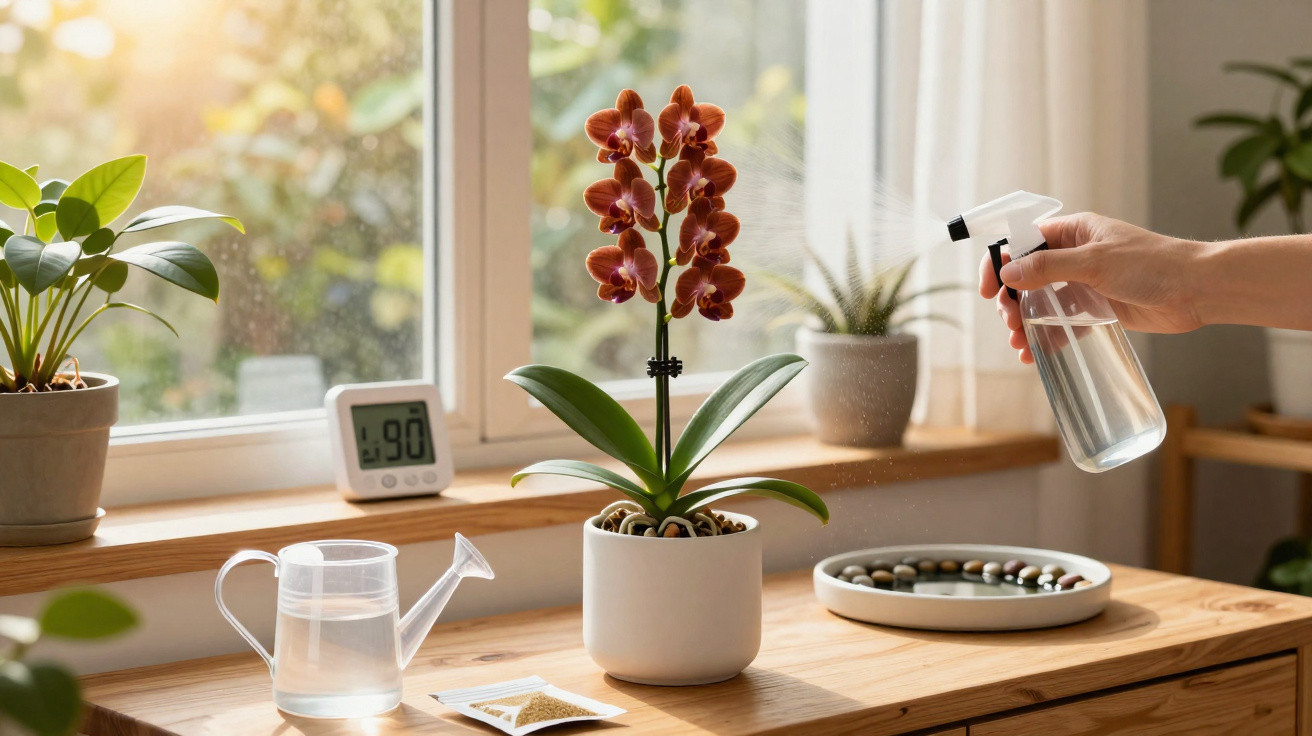
The Espresso Orchid, botanically known as Oncidium Sharry Baby, has a reputation as a small diva for the windowsill. However, once you understand its needs, it rewards you with burgundy-red clouds of flowers and an intense chocolate fragrance. Here is how to manage light, water, fertiliser and rest periods so that the plant does more than survive and, ideally, flowers several times a year.
What makes the Espresso Orchid so special
Oncidium Sharry Baby is a hybrid orchid originating from tropical regions. Its name, “Espresso Orchid”, refers to its dark flowers and a scent reminiscent of a chocolate-and-vanilla dessert rather than bitter coffee.
The Espresso Orchid rewards proper care with long flower sprays, an intense fragrance and remarkably frequent flowering cycles.
The plant produces pseudobulbs: swollen storage organs at the base of its shoots. These produce long, branching flower stems which, under good growing conditions, can carry dozens of small blooms. While these stores make the orchid quite resilient, they also leave it sensitive to constant waterlogging.
The right location: light, temperature and humidity
Light: bright, but never blazing sun
The Espresso Orchid needs plenty of bright light but cannot tolerate harsh midday sun. An east- or west-facing window is considered ideal. Morning sun and later afternoon sun are beneficial, whereas direct sun at midday can quickly scorch the leaves.
- Choose a bright position without direct midday sun.
- An east-facing window is particularly suitable for sensitive specimens.
- A west-facing window works well if high-summer sunshine is lightly filtered with a curtain.
- North-facing windows are often too dim; grow lights can help here.
During winter, natural daylight is no longer sufficient in many homes. In that case, use an LED grow light positioned 30–45 centimetres away for around 10–12 hours each day. This keeps the growth rhythm steady and prevents buds from drying out prematurely.
Temperatures: slight variations trigger flowering
This orchid prefers comfortably warm daytime conditions followed by distinctly cooler nights. Typical comfortable ranges are:
| Phase | Daytime temperature | Night-time reduction |
|---|---|---|
| Growth | 18–27 °C | approx. 5–8 °C cooler |
| Flower initiation | 20–24 °C | noticeable cooling at night |
The difference between day and night temperatures is regarded as an important trigger for new flowering shoots. Proximity to radiators, air conditioning or permanently tilted windows can easily cause more extreme fluctuations and dry air. This stresses the plant, and buds may fall before they open.
Humidity: a miniature tropical climate
Oncidium Sharry Baby hybrids thrive at roughly 40–70 per cent humidity. Particularly in winter, levels in many homes fall well below this range. A simple option is a pebble tray covered with a shallow layer of water. The pot should rest on the stones, not in the water.
If you own several plants, grouping them together can create a small, more humid microclimate. A compact humidifier can help in exceptionally dry rooms. You can mist or shower the leaves, but do this in the morning so that they dry fully before night-time.
Watering correctly: almost too dry is better than constantly wet
Incorrect watering is the most common cause of problems with the Espresso Orchid. Its roots need plenty of air, although they also require thorough soaking for short periods.
The finger test before every watering prevents most problems: water only once the growing medium has almost dried out.
Everyday watering practice
Push your finger around two centimetres into the substrate. If it still feels slightly moist, wait. Water when it is almost dry.
- Growth period (spring to autumn): usually water once a week.
- Winter rest: watering every 10–14 days is often enough.
- Water: use room-temperature, preferably soft water, such as rainwater or filtered tap water.
When watering, flush the pot thoroughly until water runs from the drainage holes below. Let it drain completely before returning it to its cachepot. Never leave water standing in the outer pot, as the roots quickly develop rot.
Fertilising: dilute, but regular
The Espresso Orchid is not a heavy feeder, yet it needs a steady supply of nutrients in small quantities. A specialist orchid fertiliser is the best choice. Reduce the amount stated on the bottle to one quarter.
| Growth phase | Fertiliser type | Frequency |
|---|---|---|
| Active growth | balanced orchid fertiliser (e.g. 20‑20‑20) | weekly at weak concentration |
| Flowering | bloom-focused fertiliser (e.g. 10‑30‑20) | around every two weeks |
| Rest period | lightly dosed standard fertiliser | once a month |
Many experienced orchid growers summarise the approach with this reminder: “Weekly, but weak” – frequent tiny amounts are better than infrequent strong concentrations. Too much fertiliser burns the fine roots, while too little produces thin, weak shoots.
Repotting: fresh substrate every two years
After around 18–24 months, bark-based substrate is generally so decomposed that the roots no longer receive enough air. This is when it is time to repot. Spring is the best period, when new shoots are just appearing but flowering stems have not yet formed.
The right pot and substrate
- Select a pot only one size larger, as orchids prefer a relatively snug fit.
- Use several drainage holes, ideally including side holes, so water drains more quickly.
- Choose a substrate of coarse bark pieces with perlite and a little charcoal.
- Do not use ordinary potting compost, as it stays wet for too long.
Before planting, soak the fresh bark substrate for several hours, then allow it to drain well. When removing the orchid from its old pot, cut away any soft, brown or hollow roots with clean scissors; retain only firm, pale roots.
Set the plant at roughly the same height as before. Position new shoots towards the centre of the pot where possible, leaving room for further growth. Water cautiously during the first few weeks after repotting and do not immediately apply full-strength fertiliser, allowing damaged roots time to recover.
Keeping pests under control
Spider mites, scale insects and mealybugs are especially likely to appear in warm, dry air. Inspecting the plant closely on a regular basis lets you spot problems early. Sticky deposits, fine webbing or cotton-like dots in the leaf axils are typical signs.
Early checks are half the battle: small infestations can usually be stopped completely with gentle treatments.
Light infestations can be wiped away using a soft cloth, some water and a few drops of mild washing-up liquid. Follow this with several treatments of neem oil or a suitable spray. Keep affected plants slightly apart for a few weeks to prevent the problem spreading to other orchids.
How the Espresso Orchid flowers several times a year
Many owners are surprised when the plant shows nothing for a long time after its first flowering period. In most cases, it is lacking light, a temperature drop or a brief rest phase.
Treating flowering stems correctly
Once flowering is over, remove the faded individual flowers gradually. Leave the flower stem in place initially. Cut it back only to around the second or third node above the base. With a little luck, a new side branch carrying further flowers will emerge from a dormant bud below.
After a completed flowering period, reduce watering slightly for four to six weeks. The plant should still receive light and humidity, but it will grow more slowly. Afterwards, resume normal watering and fertilising. A new flower spike often develops from a fresh pseudobulb at precisely this stage.
Common mistakes – and how to avoid them
- Yellow, soft leaves: usually caused by waterlogging; check the pot and roots.
- Wrinkled pseudobulbs: often the result of overly long dry spells; adjust the watering routine.
- No flowers despite growth: too little light or hardly any difference between daytime and night-time temperatures.
- Dried-out buds: draughts, proximity to heating or major fluctuations in humidity and temperature.
If you are unsure, use a simple hygrometer and thermometer. They allow you to assess the room climate and location conditions more objectively, rather than watering or moving the plant based solely on instinct.
A few more practical everyday tips
The Espresso Orchid is well suited to people who have already gained some experience with Phalaenopsis and would now like to progress a little further. It requires somewhat more light and attention, but will forgive brief care mistakes provided its root system remains healthy.
If you enjoy decorating, display the plant in a simple cachepot and place it centrally while in flower – for example, on the dining table, as long as it is not directly in a draught. Once flowering ends, move it back to its optimal bright location. That way, the fragrance remains where you can enjoy it, while the plant gathers strength for its next display in its regular spot.





Comments
No comments yet. Be the first to comment!
Leave a Comment