
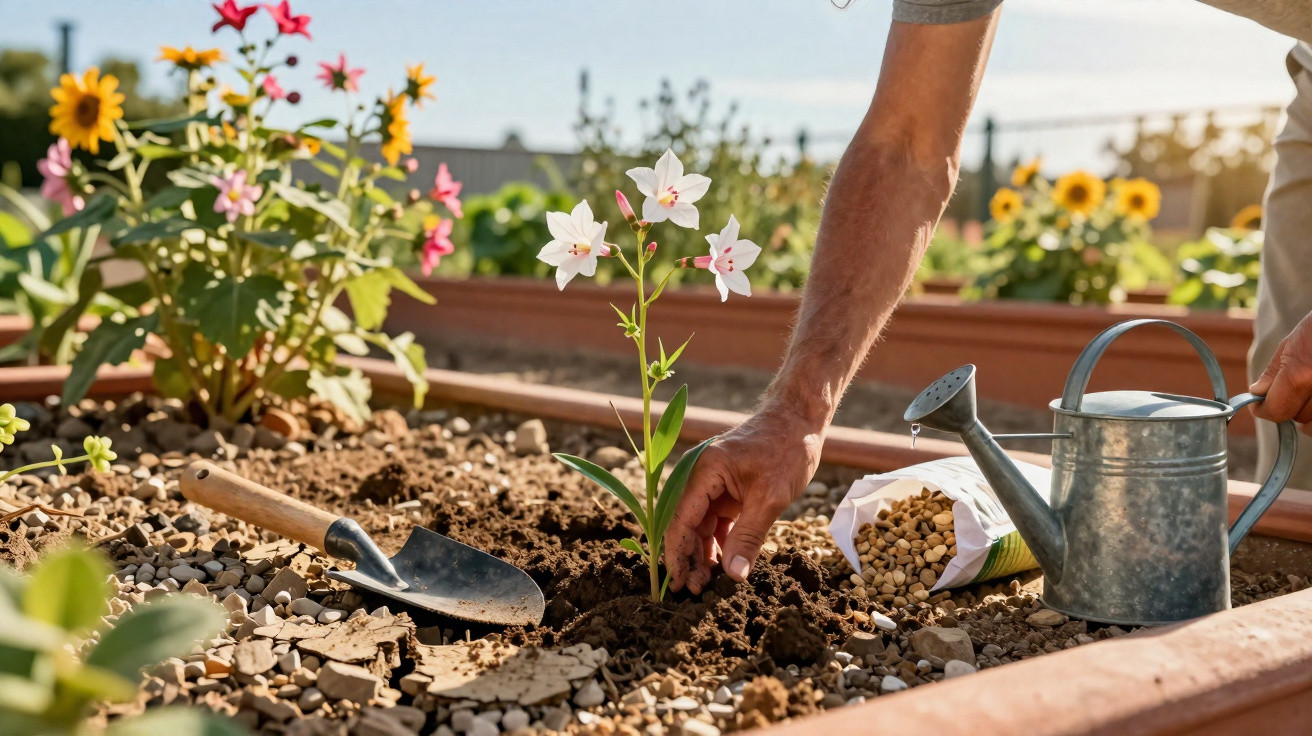
Increasingly extreme summers are turning watering into a test of patience – and an expense. Many amateur gardeners are therefore looking for plants that cope with heat and drought without complaint. One rather understated but highly useful perennial can do exactly that: gaura, often called wandflower. Taking a few targeted steps in April can make it almost indestructible – even in a bone-dry gravel bed.
Why April matters so much for gaura
During April, the soil gradually warms up before intense heat arrives. At the same time, many areas still receive regular spring rainfall. Gaura uses this combination to produce strong roots that reach deep into the ground.
The plant forms what are known as taproots, which grow vertically downwards. This allows it to access moisture layers at the height of summer that other perennials can no longer reach.
"Planting or dividing gaura in April gives this perennial several weeks’ head start – and lays the foundations for genuine heat protection from below."
An early start to the year gives gaura time to establish itself before prolonged dry spells begin. By contrast, plants put in during May or June quickly become stressed, need watering more frequently and often develop shallower roots.
Site and soil: the essential basics
Gaura originally comes from relatively sparse, sunny parts of North America. It behaves much the same way in the garden: abundant light, little wetness and loose soil are the conditions it prefers.
Full sun rather than partial shade
This perennial needs plenty of light to remain sturdy and flower freely. A position in full sun keeps its stems upright and preserves its characteristic, gently dancing shape.
- Ideal: a south- or west-facing, unshaded position with at least six hours of sunshine each day
- Acceptable: bright partial shade, although it will produce slightly fewer flowers
- Problematic: densely shaded areas, where gaura becomes leggy and flowers only sparsely
Good drainage is essential, not optional
This perennial strongly dislikes having wet roots. Permanently damp soil can rapidly cause root rot. Anyone gardening on heavy clay soil should improve it before planting.
Useful measures include:
- Work coarse sand or grit into the planting hole.
- Check that water can drain away freely: waterlogging must not occur.
- Avoid planting in dips where rainwater collects.
"Well-drained, fairly lean soil will make gaura longer-lived than any expensive fertiliser."
Planting gaura in April: step by step to a drought-tolerant plant
Choose the position and prepare the ground
First, select a sunny spot, ideally in a rock garden, gravel bed or along the dry edge of a perennial border. Allow around 40 to 60 centimetres between plants, depending on the variety and the desired planting density.
Proceed as follows:
- Dig a planting hole roughly twice as wide as the root ball and about the same depth.
- In heavy soil, place around one litre of gravel or coarse sand at the bottom of the hole.
- Mix the excavated soil with two litres of loose, fairly sandy growing medium or fine gravel.
This mixture enables rainwater and irrigation water to drain away quickly while still giving the roots a fine soil structure into which they can grow.
Plant correctly and water just once
Position the root ball so that its top sits exactly level with the surrounding soil. Planting too deeply can easily lead to rot, especially in wet springs.
Then fill in the loose soil around the sides and firm it gently so that no sizeable air pockets remain. Immediately afterwards, the perennial needs a generous first drink: around two litres of water per plant.
"The first watering after planting is essential – after that, put the watering can away and let the roots do their work."
This single, thorough watering ensures that the roots make contact with the soil. Afterwards, gaura should not be constantly fussed over. Short dry periods encourage its roots to travel downwards, which is exactly what makes the plant so drought-resistant later on.
Dividing established clumps: renewed vigour with an April refresh
Older gaura clumps tend to become bare in the centre. Flowering shifts to the outside and the middle starts to look tired. Division is the answer, and April is again the ideal time.
This is how to rejuvenate the plant:
- Push a spade generously around the perennial and lift out the root ball.
- Divide the clump into three or four sections, for example using a sharp spade blade.
- Make sure every section has its own roots and a few young shoots.
- Replant the divisions immediately, either in new positions or back in the same bed.
- Water each section with one to two litres after planting.
Once this initial help has been given, the watering can should go back in the shed. April provides enough moisture for the plants to establish themselves again.
The one summer cut that keeps gaura flowering into autumn
When the first flush of flowers fades in high summer, gaura often begins to look a little weary. This is precisely when the important summer cut is needed.
Use clean garden shears to cut back around half of the stems substantially. It may look drastic at first, but it triggers a powerful burst of new growth.
"After cutting back, the perennial sends up fresh shoots – followed by a second, extended flowering period lasting until the first frosts."
Additional fertiliser is generally unnecessary. Too many nutrients make gaura soft and susceptible rather than robust and drought-tolerant. Those who wish to can simply work in a thin layer of mature compost after cutting back.
Common mistakes that make life difficult for gaura
This perennial requires very little care. However, several mistakes occur regularly in everyday gardening, and they are easy to avoid.
- Permanently wet soil: waterlogging encourages root rot and causes the plant to collapse.
- Too little light: in shade, gaura stretches excessively, flowers less and is more likely to flop over.
- No cutting back: without a summer cut, the flowering period is considerably shorter and the plant ages more quickly.
Gardeners who know these pitfalls will often enjoy years of minimal work and an abundant floral display from gaura.
Winter care and plants that pair well with gaura
In autumn, the plant can be cut back to 10 to 15 centimetres above ground level. In mild areas, it may even remain partly green through winter. In very cold locations, a light winter mulch of leaves or bark around the root area provides protection.
One point remains important in winter too: the soil must not become waterlogged. In places where water stands, the risk of losing the plant is significantly greater than the danger posed by frost alone.
In planting schemes, gaura combines particularly well with perennials and grasses that enjoy similar conditions, including:
- lavender
- catmint
- varieties of sage
- ornamental grasses such as feather grass or fountain grass
- thyme and other Mediterranean herbs
These combinations bring movement to a border, cope with little water and still look lively rather than sparse.
Practical tips for a less stressful gardening routine
Many amateur gardeners underestimate how much a well-chosen planting time affects summer watering needs. Those who plant gaura in April can get through the hot period with considerably less watering in many areas.
The plant is also interesting for anyone who travels frequently for work or has time for the garden only at weekends. Once established, it survives longer dry spells that would have caused other perennials to wilt long ago.
There is another benefit: gaura attracts numerous insects. Its delicate flowers provide a useful landing place for bees and butterflies without making the garden look like an untamed wilderness. Particularly in front gardens currently made up of gravel areas and uniform greenery, this perennial restores colour and life without creating much extra work.
Anyone already considering making their own garden better suited to heat can begin with an uncomplicated trial using several gaura plants. A manageable amount of work in April creates a perennial foundation that copes far more calmly with summer heat, lack of water and short holidays than many traditional bedding plants.





Comments
No comments yet. Be the first to comment!
Leave a Comment