
At car boot sales, undiscovered vintage treasures are waiting to transform your home completely for just a few pounds.
Many people would love to make their home feel cosier and more individual, but are put off by the prices charged by furniture shops and design stores. Anyone willing to spend a little time browsing can uncover remarkably attractive pieces at car boot sales, house-clearance sales and second-hand shops – often for under £10. These are no longer places frequented solely by bargain hunters; professional decorators shop there too.
Why car boot sales are so exciting for home interiors right now
For interiors enthusiasts, car boot sales are what outlet centres are for brand shoppers: places where patience can lead to genuinely excellent finds. Rather than flawless, interchangeable catalogue décor, they offer one-off pieces with a past, patina and sometimes minor imperfections – which is precisely where their appeal lies.
“Anyone who shops with purpose can make their living room feel completely different with five to seven car boot sale finds – often for less than £50.”
Many interior designers rely on this combination: a few new basics from a furniture shop, complemented by older pieces that add personality. They look for objects that are attractive as well as useful, whether for extra surface space, handy storage or atmospheric lighting.
Under £10: finds that look more expensive than they are
Woven baskets: brilliant for storage and decoration
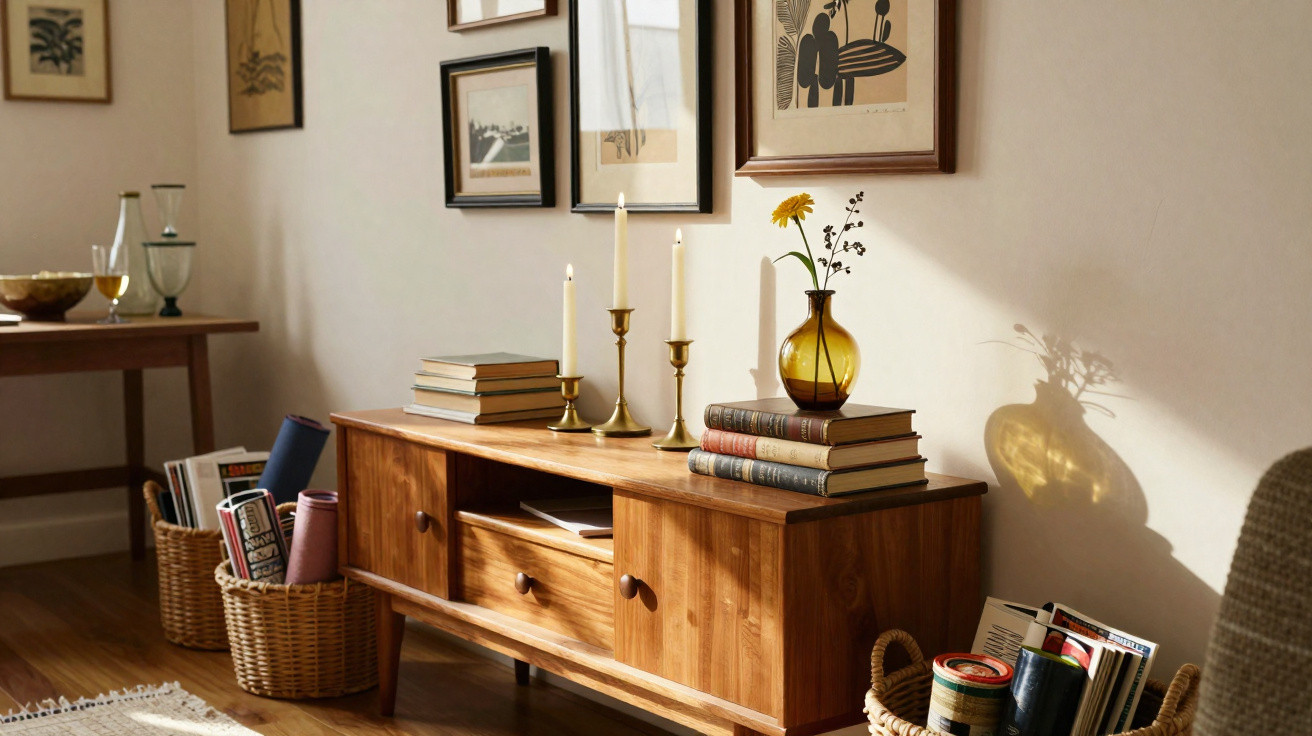
At car boot sales, decorators are particularly likely to pick up baskets made from natural materials such as rattan, raffia or seagrass. The appeal is obvious: they keep things tidy, hide tangled cables or toys, and make a room feel more homely at the same time.
- In the living room, beside the sofa for throws or cushions
- In the hallway for hats, scarves or the dog's lead
- In the bathroom for towels or toiletries
- In the bedroom as a laundry or magazine basket
- As a planter cover for large plants
Baskets exactly like these appear at car boot sales all the time, often priced between £3 and £8. Small signs of use are no drawback; if anything, they look less like something newly bought off a shelf and blend more naturally into a cosy interior.
Brass candlesticks: candleholders with retro glamour
Brass candleholders are a classic car boot sale find. Many date from the 1970s or 1980s, feel substantial and are noticeably better made than much of today’s inexpensive stock. Add a simple dinner candle and even an ordinary dining table can suddenly resemble a scene from a design magazine.
Typical ways to use them include:
- Grouping three to five at different heights on the dining table
- Using one alone on a windowsill or bedside table
- Placing one on a stack of books on a chest of drawers
- Adding a small vase with one or two flower stems beside it
At car boot sales, prices commonly range from £2 to £10 each, depending on size and condition. Light tarnishing can be removed quickly with metal polish – or, for those who prefer a muted finish, the aged look can simply be left as it is.
Hardback books as decorative pieces rather than dust collectors
Hardback books with cloth or imitation-leather covers can be surprisingly decorative, even if nobody is interested in reading them. Many car boot sale shoppers focus solely on spine colour, lettering and size, deliberately using them to create small “book sculptures”.
“Stacks of books are a simple way to add height, structure and interest to an otherwise flat surface – such as sideboards, windowsills or coffee tables.”
Popular approaches include:
- Stacks in closely related shades, such as beige and brown only
- Contrasting stacks, with dark books beneath a pale object
- Books laid horizontally to form a plinth for a vase or sculpture
In many car boot sale boxes, hardbacks cost £1 to £3. Anyone with an eye for colour can give their shelves a very high-end look for very little money.
Vintage picture frames: from inexpensive to elegant, there is everything
Picture frames in interiors shops are often surprisingly costly. At car boot sales, similar – and sometimes better-quality – examples can be found in boxes for loose change. Solid wood frames, especially those with moulded details or gilding, are particularly sought after.
Many people now use them for far more than photographs:
- With a dried flower behind the glass
- With an attractive fabric offcut or wallpaper pattern as a backing
- With handwritten recipes from grandparents
- An empty frame used as a decorative object, perhaps placed on a stack of books
Family photographs in old frames often feel more emotional than they do in standard new designs. The contrast between aged wood and a fresh photographic print creates an engaging combination.
Glass, ceramics and more: creating a retro look on a small budget
Glasses, dishes and bowls: low prices, high impact
Anyone walking through a car boot sale will almost inevitably come across stalls full of glassware. Among the bric-a-brac, there may be hand-blown glasses, colourful 1970s dessert dishes or weighty crystal bowls, often for only a few pounds.
These pieces are not just for entertaining guests; they also work well as everyday decoration:
- Small dishes for jewellery or keys on a chest of drawers
- Old wine glasses as miniature vases for single flowers
- A fruit bowl as a focal point on the dining table
- A colourful assortment of glasses for an intentionally imperfect table setting
While comparable pieces can easily cost £20 or £30 in an interiors shop, car boot sale prices are often between £1 and £5. Developing an eye for quality makes it possible to add carefully chosen accents.
Vases and jugs: characterful pieces for sideboards and windowsills
For many décor fans, ceramic vases and jugs are the season’s “hits” – whether matte, glossy, patterned or completely plain. Car boot sales regularly turn up designs that would cost easily five times as much in the vintage section of a shop.
“One striking jug on a simple sideboard can have more impact than ten small decorative pieces placed side by side, creating visual clutter.”
Typical styling ideas include:
- A large ceramic jug displayed alone on a chest of drawers as a statement piece
- A small group of vases in differing shapes and heights
- An old water jug used as a vase for branches and dried flowers
- A narrow vintage vase on a bedside table with a single flower
Many sellers would prefer to sell these items as a set, but it is often possible to negotiate. Those feeling bold can combine different styles: matte, modern décor alongside colourful retro vases or one-off handmade pottery pieces from the 1960s.
How to find the best pieces – while paying next to nothing
A strategy for visiting car boot sales
Anyone looking specifically for vintage décor will do better with a clear mental list. Buying at random can quickly result in overcrowded shelves and items that do not actually suit the space.
Useful questions to ask before buying:
- Do I already have a specific place for it at home?
- Does the piece broadly work with the colours in my interior?
- Will it replace something that currently bothers or annoys me?
- Does it seem sturdy and practical for everyday use?
Arriving early in the morning usually offers the best chance of finding the most interesting pieces. Towards the end of the day, prices are often lower because sellers do not want to take everything home again. A brief, friendly chat makes haggling easier – and it is not unusual to pay considerably less than the original price.
What to check when buying second-hand pieces
However inexpensive many finds may be, it is always worth checking their condition and materials, especially with glass and ceramics.
- Cracks and chips: avoid items with hairline cracks running through them.
- Check screws and fittings, for example on picture frames or candlesticks.
- Smell baskets and fabric items – musty odours are difficult to remove.
- Stability: does the candleholder wobble? Is the jug sturdy enough?
Many cosmetic flaws, including small scratches, tarnished metal or lightly discoloured fabrics, are what make a piece interesting in the first place. The real concern is when stability, hygiene or safety is affected.
How a few pieces can create a completely different look
Anyone who does not want to overhaul the entire living room should focus on a few strong anchor points. Just three to five new car boot sale finds are often enough to noticeably change a room’s atmosphere.
A possible mini makeover for under £50 could include:
- One large natural basket beside the sofa for throws
- Three brass candleholders on the dining table
- Two stacks of hardback books on a sideboard and windowsill
- Two or three old picture frames containing photographs or dried flowers
- One distinctive ceramic vase as a focal point
This combination immediately makes a room feel more personal, warmer and less like a catalogue. Many people only then realise how strongly individual objects shape the mood of a room.
For anyone who finds terms such as “vintage” or “brocante” confusing: they essentially refer to older, pre-owned objects with character, generally from before the mass production of cheap decorative goods. They are not automatically valuable antiques, but rather everyday pieces for the home – sturdy, charming and often surprisingly affordable.
Those who enjoy finding such pieces can gradually refine their interior style further, with seasonal accents, deliberately chosen colour tones or small collections of items such as vases or candleholders. In this way, a home evolves over time without requiring an expensive annual trip around furniture shops.



Comments
No comments yet. Be the first to comment!
Leave a Comment