
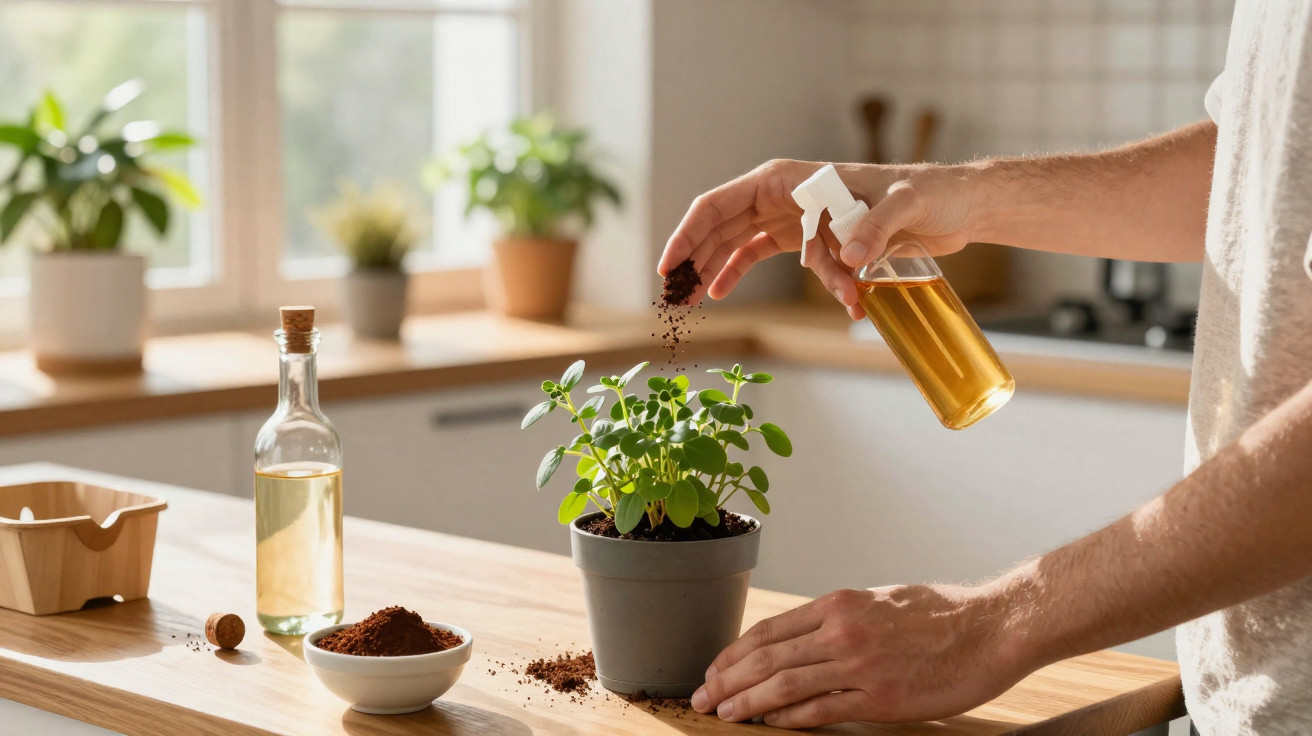
Among the household methods that have become increasingly popular in recent years, the combination of coffee grounds and vinegar stands out for its versatility, being used for both domestic cleaning and plant care. Reusing this waste product alongside a commonly used acidic ingredient can reduce reliance on ready-made chemical products, provided certain limits on its use are observed.
What is the coffee grounds and vinegar mixture, and why does it work?
A mixture of coffee grounds and vinegar combines organic waste that might otherwise be thrown away with an acidic ingredient that cuts through grease and helps neutralise odours. White distilled vinegar is most often chosen because it is inexpensive, widely available and has a milder smell than other varieties.
Coffee grounds act as a mildly abrasive material and provide organic matter, making them useful for tasks requiring gentle scrubbing. Used moderately, the two ingredients together offer a supporting solution for particular situations in both the kitchen and the garden.
How to make and use coffee grounds and vinegar for cleaning and in the garden
For cleaning, use grounds that have cooled and been well drained, mixing them with vinegar to create a loose paste. This preparation is suitable for hard-wearing surfaces such as grills, baking trays, stainless-steel pans, and stainless-steel or ceramic sinks; porous or delicate materials should be avoided.
A straightforward method for preparing and applying the mixture involves a few basic steps, allowing its benefits to be used without damaging surfaces:
- Combine 1 part damp coffee grounds with 2 parts white distilled vinegar, adding a little water if needed;
- Spread a small amount over the chosen area and rub gently with a sponge or cloth;
- Rinse thoroughly under running water to remove every trace of residue, then dry with a clean cloth.
In the garden, the safest approach is to use coffee grounds and vinegar separately. Slightly dried grounds can be worked into the soil or spread as a thin surface layer, whereas vinegar, always heavily diluted with water, should be used only in cracks and areas with weeds, away from sensitive plants.
Is mixing coffee grounds and vinegar good for plants?
This direct mixture should be used carefully when tending plants, as vinegar is acidic and, in excess, may burn leaves and roots. Coffee grounds on their own are usually safer: they can serve as a light organic addition and help improve soil structure when used in small quantities.
For pots and flower beds, it is preferable to avoid repeated vinegar applications, even when diluted, especially where the soil is already acidic. A practical alternative is to add the grounds to organic compost and keep the vinegar for cleaning tools, pots and paving, always testing it first on a small area to check the reaction.
Precautions when using coffee grounds and vinegar at home and in the garden
To use this combination without issues, avoid keeping damp coffee grounds for several days in sealed containers, as mould can develop. Letting them dry slightly in an open container improves their keeping quality and lowers the risk of unpleasant indoor smells.
Frequency of use also matters: do not make the mixture part of a daily routine, whether on delicate surfaces or around plants. Ensuring good ventilation while using vinegar, carrying out small-area tests, and monitoring the soil and leaves are simple measures that make this useful household tip safer and more effective day to day.


Comments
No comments yet. Be the first to comment!
Leave a Comment